Physical Address
304 North Cardinal St.
Dorchester Center, MA 02124
Physical Address
304 North Cardinal St.
Dorchester Center, MA 02124

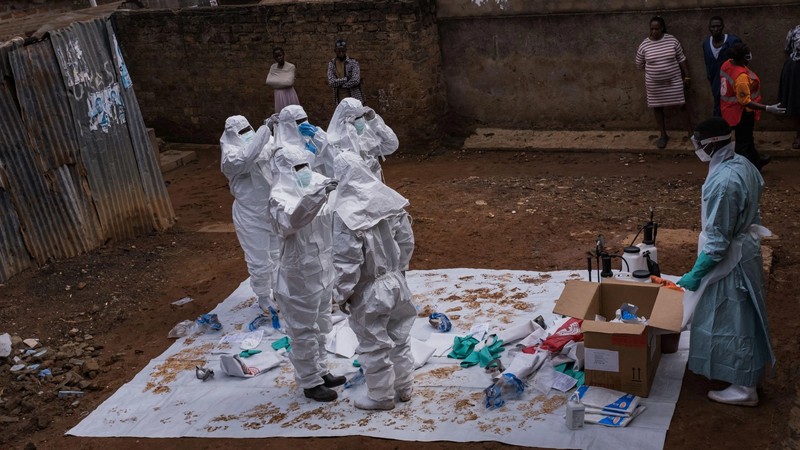
Every time Ebola makes headlines, the world’s gaze snaps to Africa — briefly. International organisations mobilise, experts brief, governments warn. Then the cameras leave. But the conditions that made the outbreak possible? They stay.
Ebola is not the real story. The real story is the millions of Africans whose daily lives are shaped by poverty, crumbling healthcare systems, fragile infrastructure, and a lack of basic opportunity — long before any outbreak, and long after it ends.
Disease does not create inequality. It reveals it. When an outbreak hits a wealthy nation, decades of investment in hospitals, laboratories, and public health systems kick in. When it strikes some of Africa’s poorest communities, those protections are often underfunded, overstretched, or simply absent.
The result is not just a medical emergency. It becomes a test of human dignity.
Too often, conversations about Africa reduce millions of lives to numbers — infection rates, mortality figures, GDP losses, aid packages. Real people get lost in the data.
If the world genuinely believes in human dignity, then the implications are clear: access to healthcare, safe housing, clean water, and education cannot be treated as privileges. They are not policy targets. They are expressions of basic respect for human life.
A society’s true character is measured not by how it treats its most powerful, but by how it treats its most vulnerable. History’s greatest moral breakthroughs came when societies chose to expand their circle of concern — to include those who had been ignored.
Ebola should serve as more than a public health alarm. It should be a moral wake-up call. Compassion that only surfaces during a crisis is not enough. What is needed is sustained, long-term investment in healthcare, sanitation, education, housing, economic development, and — crucially — local leadership.
The future of the continent will not be written by foreign governments, international organisations, or aid packages alone. It will be determined by whether ordinary Africans are given the tools, resources, and voice to shape their own destinies.
The poor do not just deserve charity. They deserve dignity. They do not just deserve temporary relief. They deserve opportunity. And they do not just deserve to be spoken about — they deserve to be heard.